Basic Education

Best Playschools in Metro Manila: 5 Qualities That Matter in 2026

Finding the right first school for your child in a bustling hub like Metro Manila is about more than just convenience—it’s about setting the foundation for a lifetime of curiosity. With hundreds of options from Quezon City to Alabang, how do you distinguish a truly exceptional center from a standard daycare?

If you’re a parent navigating the world of early childhood education in the Philippines, here is a guide to the five essential qualities that make a playschool stand out in 2026.

1. Safe, Engaging Facilities and Age-Appropriate Toys

Beyond Aesthetics: It’s not just about bright colors; it’s about child-safe ergonomics. High-quality schools invest in non-toxic materials, rounded furniture, and gated learning zones.
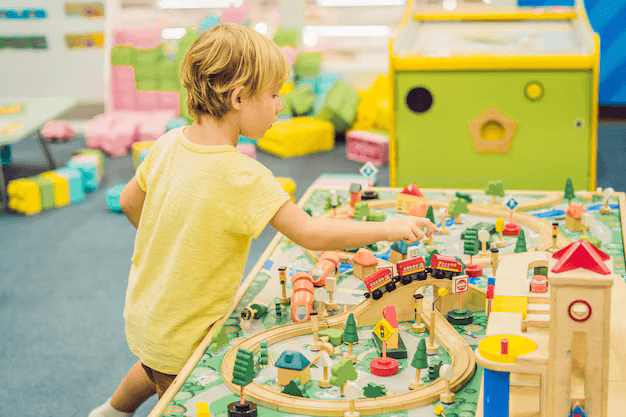
The Power of Play Tools: Look for centers that prioritize sensory-rich toys—think building blocks, water tables, and “loose parts” play—rather than passive screen time.
Safety First: In today’s world, top-tier schools maintain rigorous sanitization protocols and secure entry systems, giving parents peace of mind while they are at work in Makati or BGC

2. A Proven Play-Based Learning Philosophy

The best playschools move away from rigid “sit-and-repeat” lessons. Instead, they embrace play-based learning, a methodology backed by global educational research.

In these environments, children aren’t just “playing”; they are developing critical thinking and linguistic skills. Whether through guided storytelling or imaginative role-play, a standout school ensures that every activity has a developmental purpose. This approach fosters a “love for learning” rather than a fear of testing.

3. Passionate, Certified Educators

A school is only as good as its heart—the teachers. In the Philippines, the most reputable playschools employ educators who are not only experienced but are specifically trained in Early Childhood Care and Development (ECCD).

Low Teacher-to-Student Ratios: This is the “gold standard.” A standout school ensures your child isn’t just a face in a crowd but receives the individual emotional support they need to build confidence.

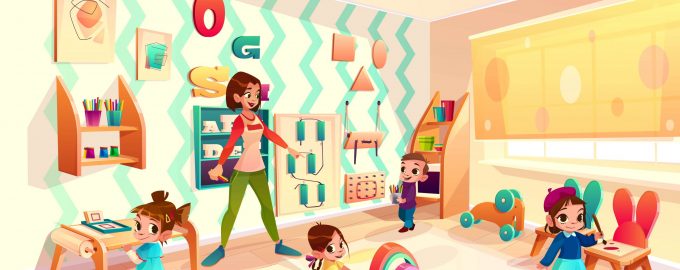
Empathy-Led Teaching: Look for teachers who model kindness and patience, as social-emotional growth is just as important as learning the ABCs.

4. Daily Structure and Routine

For a toddler, the world can feel chaotic. A great playschool provides a “rhythmic” daily structure that helps children feel safe and in control.

A standout routine typically balances:

Circle Time: Group interactions that build the foundations of Social-Emotional Learning (SEL).
Active Play: Burning off energy and developing gross motor skills.
Quiet Time: Activities like reading or nap periods to prevent overstimulation.

5. Parent Communication and Involvement

In 2026, transparency is non-negotiable. Standout playschools in Metro Manila leverage technology to bridge the gap between the classroom and the home.

Top-tier schools often use dedicated apps to share real-time updates, photos, and developmental milestones. This creates a community feel, allowing busy parents to stay involved in their child’s progress, even from the office. When a school views parents as “partners” rather than just “clients,” the child is the ultimate winner.
February 5, 2026No comments, ,
Best Playschools in Metro Manila: A Parent’s Guide

Early childhood education plays a vital role in a child’s overall development. Playschool is often a child’s first experience in a structured learning environment, making it an important foundation for social, emotional, and cognitive growth. For parents in Metro Manila, choosing the right playschool can feel overwhelming due to the wide range of options available.

Metro Manila is home to many playschools that offer nurturing environments, age-appropriate learning activities, and programs designed to support early development. This guide aims to help parents understand what makes a playschool stand out and how to explore available options within the metro.


What Makes a Playschool “Best”?

The best playschools are not defined by facilities alone, but by how well they support a child’s early learning journey. Parents may consider the following factors when evaluating playschools:

  • A safe and welcoming environment where children feel comfortable
  • Learning activities that promote play, creativity, and curiosityTeachers who are trained in early childhood education
  • Clean, child-friendly classrooms and play areas
  • Clear communication with parents regarding progress and daily activities

A quality playschool focuses on helping children build confidence, develop social skills, and enjoy learning at an early age.


Why Location Matters in Metro Manila

Accessibility is an important consideration for many families. Playschools located near home or work can reduce travel time and make daily routines easier for both parents and children. Metro Manila offers playschools across different cities and neighborhoods, giving families the flexibility to choose what works best for them.

February 5, 2026No comments, , ,
LRN Numbers in the Philippines – What are they? How do I get one?

LRN stands for a Learner Reference Number and it uniquely identifies a student as part of the Department of Education (DepEd) system.

Parents with children going to Kindergarden should ensure that their school issues a Learning Reference Number.  Only schools which are accredited by DepEd will be able to issue and apply for a unique LRN number for a child.

The reason it is so important to get an LRN number is that for some students who entered Kindergarden in a non-accredited DepEd preschool, they may not be allowed to enter Grade 1 and will have to either (1) Repeat Kindergarden in a DepEd accredited preschool or (2) take the Philippine Educational Placement Test (PEPT) which is only offered a few times a year.

The LRN should be automatically issued by schools who are DepEd accredited and parents should be able to ask their school principal or registrar for the unique LRN number that will identify their student in the Philippine educational system until they graduate in Senior High School. Even later into adult life, this number will be used to verify credentials such as high school records.

It is the school’s responsibility to be registered in the Learning Information System (LIS) based on DepEd order 22, Series of 2012 (https://www.deped.gov.ph/2012/03/20/do-22-s-2012-adoption-of-the-unique-learner-reference-number). The school will be responsible for applying for the LRN of a student, and also ensuring that their current students know their LRN.

Parents should be wary of choosing only DepEd accredited schools, the most recent article on unaccredited or “Colorum” schools in 2011 showed that around 25% of private schools do not have DepEd accreditation – (https://opinion.inquirer.net/94921/photos-show-accredited-schools-not-honestly-vetted-by-deped). In the case that parents enroll their child in an unaccredited school, they face the risk of not be allowed by official school organizations to enroll and their previous academic records may not be credited.

If your child attended a non-accredited school, they may first have to take the Philippine Educational Placement Test (PEPT) by registering in the nearest DepEd office. You may find the contact information at https://deped.gov.ph. The registration is typically done from July to August, however alternative dates may be offered. Once your child has passed the PEPT, you can enroll in an accredited DepEd school who can then register your child for the Learner Reference Number (LRN).

By simply knowing your child’s learner reference number (LRN), you will be able to have peace of mind knowing all their academic achievements will be properly and duly accredited by the Department of Education.

February 12, 20204 Comments