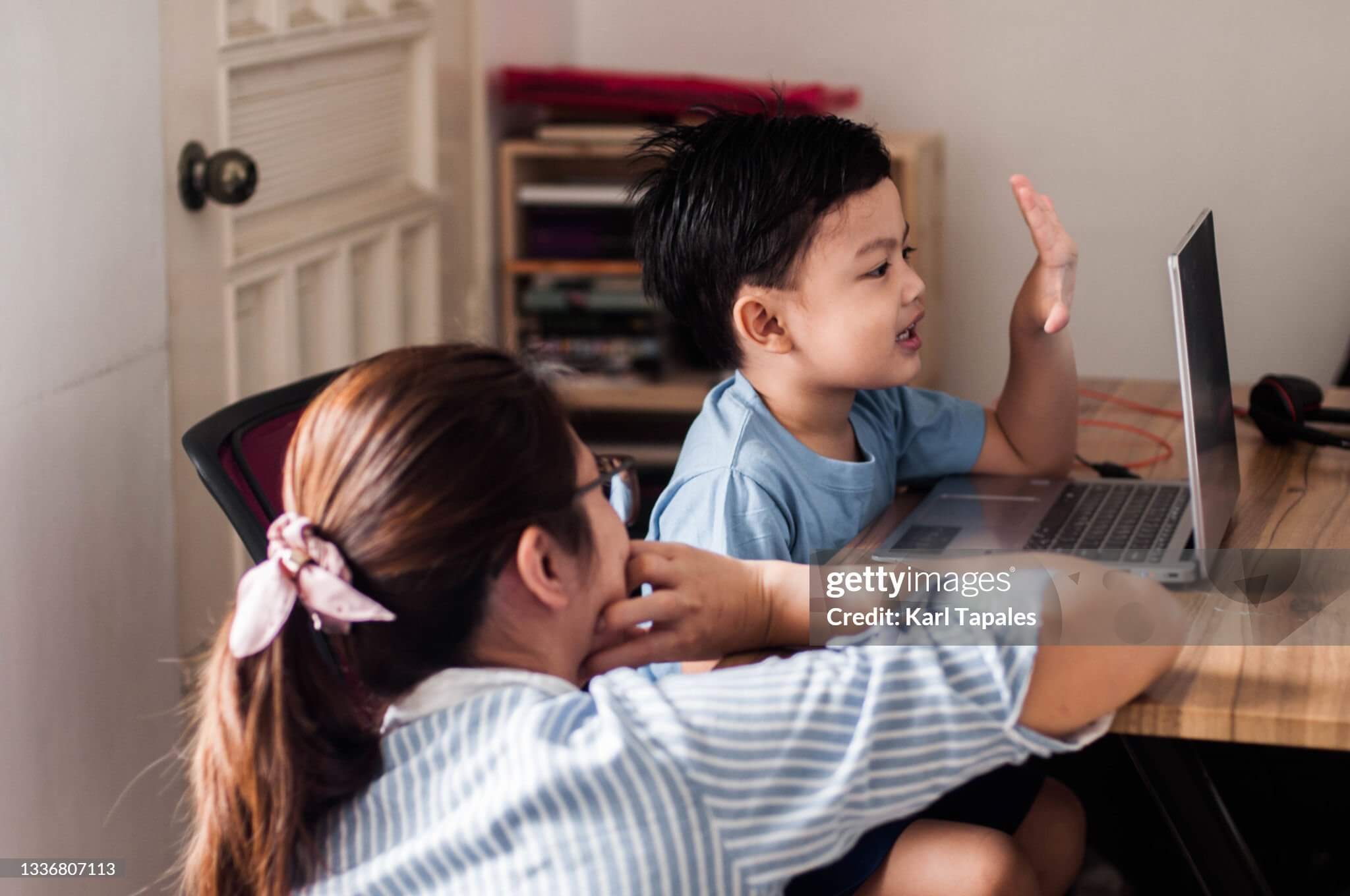
Imagine your child getting a high score in Mathematics but struggling to calculate a simple shopping discount. They may have memorized the formula, but can they apply it in real life?
This is the challenge the MATATAG Curriculum aims to address by prioritizing essential competencies and making learning less congested. With Grade 10 scheduled for implementation in School Year 2027–2028, parents should understand what this transition means for their children’s education.
Less Memorization, More Practical Learning
The MATATAG Curriculum emphasizes foundational knowledge and essential skills. In Mathematics, this could mean applying percentages to household budgets or shopping discounts. In Science, students might investigate how pollution affects their local environment rather than simply memorizing definitions.
These examples illustrate meaningful learning, although actual classroom activities depend on the teacher and applicable curriculum guide.
Reducing competencies is a positive step, but the real measure of success is whether students can apply what they learn—not simply finish their lessons.
Preparing for Grade 10 and Beyond
For parents, the MATATAG Curriculum is more than a change in school requirements—it is a reminder to look beyond grades and ask whether their children are truly learning. As Grade 10 joins the rollout in SY 2027–2028, stay involved, talk to your child’s teachers, and help your child explore the Senior High School path that fits their strengths and interests. Ultimately, your child’s success is not measured by grades alone, but by how well they can use what they learn to face real-life challenges and make informed decisions about their future.
Improving the curriculum may help students learn more effectively, but what about other challenges, such as reading comprehension, overcrowded classrooms, and unequal access to learning resources? . It raises a bigger question about the future of Philippine education. If these problems require different solutions, can one broad reform truly address them all?
Perhaps the real question is not simply whether the MATATAG Curriculum will work, but whether we fully understand the problems we are trying to solve. Before we ask how to fix Philippine education, shouldn’t we first ask what, exactly, needs fixing—and where should we begin?
When a typhoon, flood, earthquake, extreme heat, poor air quality, or another emergency disrupts school operations, parents often face the same difficult question: Is school actually suspended, or is my child still expected to study from home?
The answer is increasingly dependent on local conditions and the school’s Learning and Service Continuity Plan (LSCP).
The Department of Education (DepEd) has established a framework that prioritizes the safety of learners and school personnel while also protecting learning continuity. Under the current rules, the suspension of face-to-face classes does not necessarily mean that learning activities stop altogether. When conditions and resources allow, schools may shift to Alternative Delivery Modes (ADMs), including modular, online, or blended learning.
For working parents, however, this creates a second challenge: how do families manage an unexpected school schedule while maintaining work, childcare, internet access, printed modules, and school requirements?
What happens when classes are suspended?
DepEd Order No. 022, s. 2024, provides the current revised guidelines on class and work suspensions during disasters and emergencies. The policy covers hazards such as typhoons and tropical cyclones, heavy rainfall and flooding, earthquakes, power interruptions, extreme heat, poor air quality, and other emergencies.
The objective is twofold:
Protect learners and school personnel from unsafe conditions.
Prevent unnecessary interruption of learning.
This means parents should distinguish between suspension of face-to-face classes and a complete suspension of learning activities.
When appropriate, schools may move to distance-learning arrangements such as:
Modular Distance Learning (MDL)
Online Distance Learning (ODL)
Blended learning
Other appropriate Alternative Delivery Modes
The specific approach can depend on the local situation, available resources, and the school’s continuity plan. DepEd has emphasized that localized assessment is important because hazards and their effects can differ significantly from one community to another.
Why the decision can differ from one area to another
A typhoon affecting one municipality does not necessarily create the same conditions in another.
One community may experience flooding, while another may remain relatively accessible. One school may have electricity and internet connectivity, while another may be dealing with power interruptions or damaged facilities.
For this reason, the current framework gives local authorities and school heads responsibilities in assessing conditions and implementing appropriate responses.
A 2026 Schools Division memorandum in Catanduanes, for example, reiterated that school heads may select appropriate ADMs when face-to-face classes are suspended because of calamities and emergencies, where circumstances and resources permit. It also provided for consideration for learners who cannot complete activities because of the disruption.
For parents, this means that a national announcement about a hazard does not always translate into exactly the same learning arrangement for every school. Parents should follow the official announcement from their local government, Schools Division Office, and school.
This is one of the most important distinctions for parents.
A shift from classroom instruction to learning at home does not automatically mean that the school year has been shortened.
The legal framework for the school calendar allows class days to include learning activities conducted outside the traditional classroom. The implementing rules of Republic Act No. 7797, as amended by RA 11480, define class days as days when curricular and co-curricular activities are conducted within or outside school premises, including the home, to achieve learning objectives. The rules also provide for a school calendar of up to 220 class days.
This helps explain why schools can use ADMs to maintain instructional continuity during emergencies rather than simply adding a long series of missed days to the end of the school year.
If distance learning is feasible, a learner may still be expected to complete assigned activities, attend online sessions, submit outputs, or work through modules even when there is no face-to-face meeting.
If online or modular learning is not feasible, make-up arrangements may instead be considered. The 2026 Catanduanes guidance, for example, states that make-up classes may be conducted when online or modular learning cannot be implemented, with scheduling coordinated with teachers and parents or guardians.
K–12 is not being abolished because of these changes
Parents should also be careful about social-media posts claiming that the K–12 system is being abolished whenever DepEd announces a curriculum change, new track structure, or different learning arrangement.
RA 10533, the Enhanced Basic Education Act of 2013, remains the legal foundation for the country’s enhanced basic education system. The law established the enhanced basic education program and provides the framework for curriculum development, including the authority of DepEd to develop and refine the basic education curriculum.
What can change are the curriculum, subjects, tracks, learning standards, implementation timelines, and delivery arrangements.
This distinction is particularly important as DepEd continues to implement curriculum reforms, including changes involving Senior High School.
A curriculum restructuring should therefore not automatically be described as the abolition of K–12. Parents should look for an official DepEd order or memorandum before accepting claims circulating online.
A normal school day may suddenly become a home-learning day requiring:
A parent or guardian to supervise activities
A device for online classes
Reliable internet connectivity
Printed modules or learning materials
A quiet area for studying
Monitoring of deadlines and submissions
Communication with teachers
Assistance with activities that the learner cannot complete independently
Not every household has these resources available at the same time.
This is why parents should not assume that an online class announcement is the only possible arrangement. DepEd’s framework recognizes different delivery modalities, including modular and blended approaches, depending on circumstances and resources.
A practical checklist for parents
When your child’s school announces an ADM shift, ask these questions:
1. Is the announcement a suspension of face-to-face classes or a complete suspension of learning activities?
These are not necessarily the same.
2. What ADM will be used?
Find out whether your child will use printed modules, online activities, asynchronous work, synchronous classes, or a combination.
3. What are the submission deadlines?
A parent working from home or outside the house may need to reorganize childcare and work schedules around these requirements.
4. What happens if there is no electricity or internet?
Ask the school what alternative arrangement is available if the household cannot access online activities because of the disaster.
5. Will missed activities affect attendance or grades?
Keep copies or screenshots of school announcements and communicate promptly with the teacher if the learner cannot complete work because of the emergency.
6. Is a make-up class required?
If ADM cannot reasonably be implemented, the school may need another approach to recover missed learning.
Public and private schools may not have identical procedures
DepEd’s disaster and emergency guidelines directly apply to public schools and DepEd-operated Community Learning Centers. Private schools and private ALS providers may opt to adopt the guidelines.
This is important for parents comparing the experiences of children in different schools.
A public school in one city may implement a particular ADM arrangement, while a private school may follow its own approved learning-continuity procedures.
Parents should therefore prioritize communications from their child’s own school instead of relying on screenshots or announcements from another school or municipality.
The bigger picture: flexibility without losing accountability
Climate-related disruptions are becoming an important consideration for school scheduling because a single nationwide response may not address the different conditions experienced by every community.
The current DepEd framework attempts to balance two priorities: keeping learners safe and keeping them connected to learning.
That is why class suspension and learning continuity should not be treated as contradictory concepts.
A school can suspend face-to-face classes while continuing education through an ADM. At the same time, the system provides mechanisms for make-up learning when alternative delivery is not feasible.
For parents, the most useful approach is to separate three questions:
Is it safe to go to school?
Can learning continue safely from home?
Are there administrative deadlines that remain in effect despite the disruption?
Understanding the difference can help families respond more calmly when a sudden announcement changes the school schedule.
Most importantly, parents should verify claims about K–12, class suspensions, curriculum reforms, and vouchers through official DepEd issuances rather than relying on social-media rumors. The education system can change its curriculum and delivery methods without meaning that the legal foundation of basic education has simply disappeared.
IRR of REPUBLIC ACT NO. 7797 – IMPLEMENTING RULES AND REGULATIONS OF REPUBLIC ACT NO. 7797, OTHERWISE KNOWN AS “AN ACT TO LENGTHEN THE SCHOOL CALENDAR FROM TWO HUNDRED (200) DAYS TO NOT MORE THAN TWO HUNDRED TWENTY (220) CLASS DAYS, AS AMENDED BY REPUBLIC ACT NO. 11480 – Supreme Court E-Library. (2024). Judiciary.Gov.Ph. https://elibrary.judiciary.gov.ph/thebookshelf/showdocs/2/100875
Philippine higher education stands at a critical juncture. Fresh university graduates enter a challenging labor market shaped by inflation, stagnant entry-level pay, and rapid technological disruption. Rather than simply cutting General Education subjects, higher education must reframe GE into a work-focused, futuristic, and portfolio-driven framework that provides young Filipinos with economic direction, tech literacy, and career pathway.
1. The Economic Backdrop: Inflation, Wages, and Underemployment Pressure
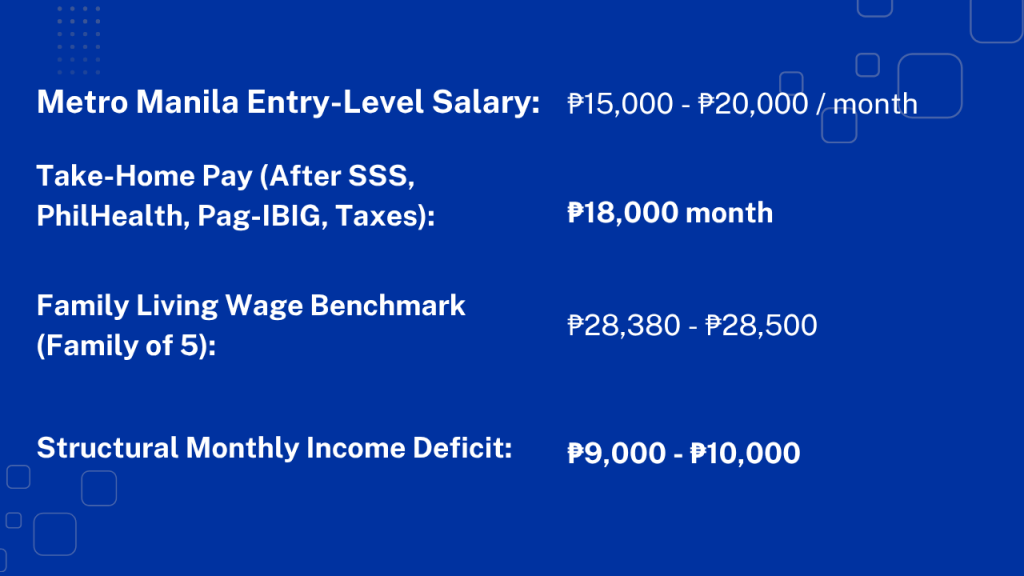
For decades, an entry-level monthly salary of ₱15,000 to ₱20,000 was considered standard for fresh college graduates in Metro Manila and urban centers. Today, that income level falls short of basic household survival.
Philippine Statistics Authority (PSA) data shows headline inflation reaching 6.1% to 6.8%, driven primarily by volatile food, energy, and transportation costs.
According to economic research by the IBON Foundation, a family of five in Metro Manila requires approximately ₱1,216 to ₱1,305 daily (roughly ₱28,380 to ₱28,500 monthly) to afford basic nutrition, housing, healthcare, and utilities. An entry-level salary of ₱20,000 leaves a structural monthly deficit of nearly ₱10,000 for single-income providers. PSA Labor Force Surveys indicate that while headline unemployment floats around 4% to 5%, the underemployment rate consistently ranges between 11% and 13%—representing over 5.5 million Filipinos who are employed but actively seeking additional hours or higher-paying jobs to match rising costs.
2. Transferable Skills vs. Market Realities: The Skill-Market Gap
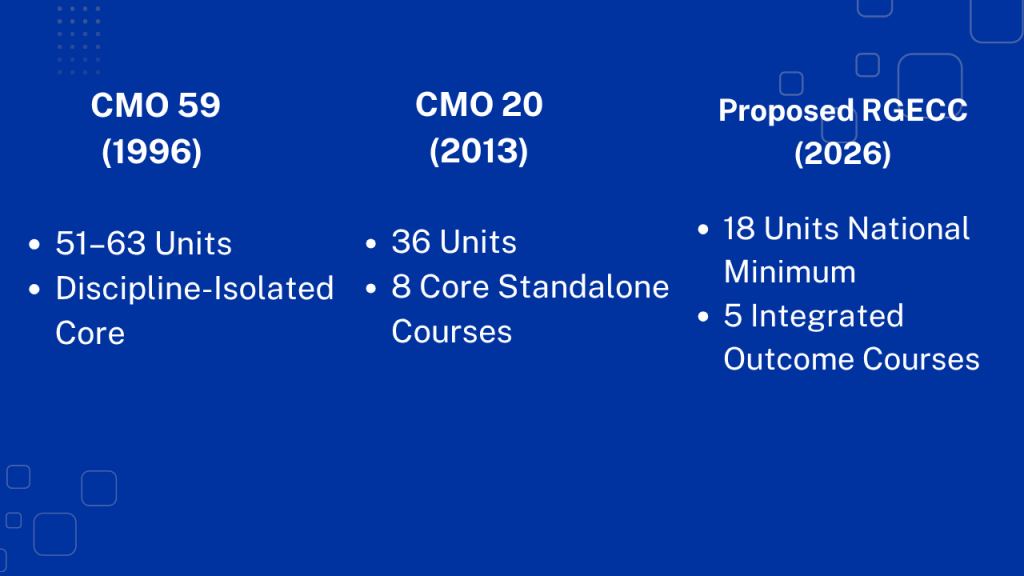
Under Commission on Higher Education (CHED) Memorandum Order No. 20 (s. 2013), General Education was streamlined to 36 units to cultivate broad, interdisciplinary “soft skills”—critical thinking, purposive communication, and global awareness. However, how well do these skills match labor market realities?
The Skill Disconnect and Employer Needs
Employer Skill Shortages: A landmark World Bank study, “Developing Socioemotional Skills for the Philippines’ Labor Market,” revealed that 66% of Philippine employers (two out of three) experience difficulty filling job vacancies due to a lack of critical socioemotional and soft skills—specifically problem-solving, adaptive communication, and execution discipline.
Global Educational Benchmarks: Programme for International Student Assessment (PISA) benchmarks show the Philippines scoring an aggregate 1,058 in overall student performance (Math: 355, Reading: 347, Science: 356). This trails regional ASEAN peers such as Singapore (1,679), Vietnam (1,403), Malaysia (1,213), and Thailand (1,182), demonstrating foundational learning gaps that higher education must rehabilitate.
The Shift to the Global Freelance Market
To escape low local entry wages, young workers increasingly turn to remote Virtual Assistance (VA), digital marketing, and software freelancing:
Metric
Local Corporate Entry-Level
Global Remote / Digital Freelancing
Monthly Income Potential
₱15,000 – ₱20,000
₱45,000 – ₱120,000+ ($5–$15+/hr)
Hiring Qualification
Academic Diploma & Transcript
Verifiable Portfolio, Work Samples, & Demos
Primary Skill Requirement
Generic Discipline Knowledge
Tool Fluency, AI Prompting, & Workflow Execution
While remote freelancing offers higher pay, it presents a steep barrier: the portfolio trap. Studies from the Philippine Institute for Development Studies (PIDS) show that fresh graduates struggle because employers—both local and foreign—increasingly require verified project portfolios rather than traditional diplomas.
3. CHED’s 3rd GE Framing (RGECC) and the 2028 Pilot Delay
To address curricular redundancy and align higher education with global standards, CHED drafted the Reframed General Education Curriculum Component (RGECC)—marking the third major overhaul of collegiate GE, following CMO 59 (1996) and CMO 20 (2013).
The Proposed 18-Unit Structure
The proposed framework trims required GE units from 36 down to 18 national minimum units, featuring core subjects such as:
Professional Communication
Global Trends and Emerging Technologies
Data, Evidence, and Ethics in a Knowledge Society
Rizal and Philippine Studies
Labor Education
The Great GE Controversy and Academic Resistance
The proposed overhaul triggered intense opposition from major universities (including the University of Santo Tomas, Ateneo de Manila University, University of the Philippines, and Philippine Normal University), academic unions, and faculty associations:
Educators argue that CHED’s prescription of exact course titles, standardized syllabi, and outcome structures oversteps its mandate to set minimum standards, violating institutional academic freedom protected under Article XIV, Section 5.2 of the 1987 Philippine Constitution.
Critics, such as former UST Philosophy Chair Prof. Paolo Bolaños, contend that stripping away dedicated philosophy, humanities, and art appreciation courses reduces higher education to a market-driven trade school designed solely to serve foreign corporate demands.
Halving GE units threatens thousands of humanities and social science educators across public and private higher education institutions (HEIs) with job loss or reduced workloads.
The reform assumes SHS graduates have already mastered humanities, ethics, and basic research. However, findings from EDCOM 2 (Second Congressional Commission on Education) highlight significant SHS learning losses, meaning tertiary students still require foundational reinforcement.
The Pilot Testing Delay
In response to widespread stakeholder pushback, position papers, and public discussions, CHED Chairperson Shirley Agrupis announced the postponement of the reframed GE pilot testing to 2028. CHED has formed an inter-agency Technical Working Group (TWG) to review stakeholder inputs and address curriculum redundancies without compromising educational quality.
4. The Case for Reframing: Elevating GE Instead of Cutting It
Simply cutting GE units to 18 risks turning higher education into narrow vocational training. The solution lies not in eliminating subjects, but in elevating and reframing them into work-focused, futuristic learning experiences.
Instead of repeating basic high school drills, tertiary GE should build economic literacy, AI fluency, and strategic career navigation—giving graduates the tools to make informed life and career choices based on data.
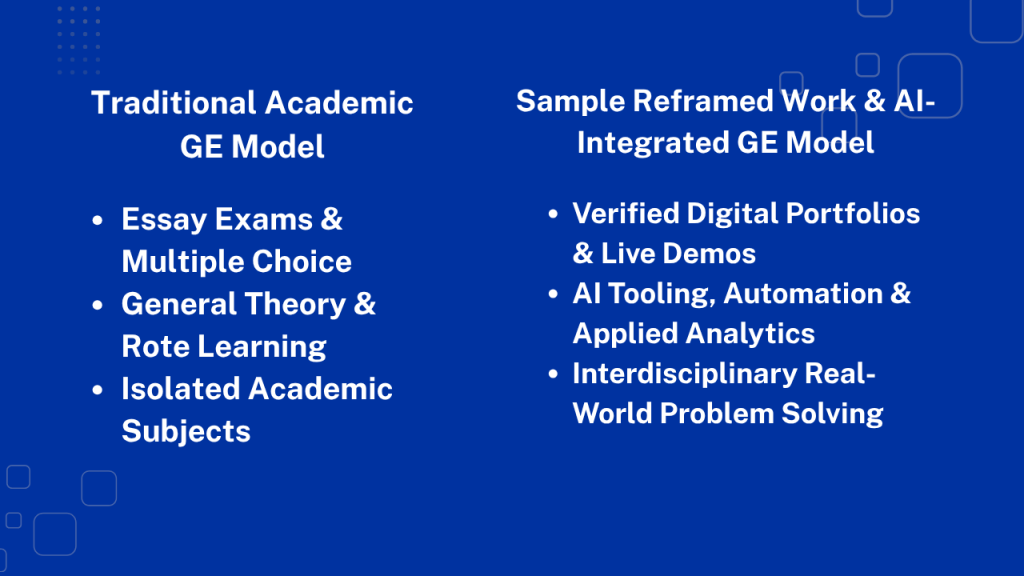
5. A Comparative Blueprint: Senior High Redundancy vs. Futuristic GE
To eliminate content overlaps between Senior High School (SHS) and college, tertiary General Education must shift toward high-value, practical outputs.
A public Client Pitch Deck, Freelance Proposal, or Corporate Communication Suite
Mathematics in the Modern World(Stats and formulas)
Data Analytics & Financial Intelligence
Financial modeling, inflation impact assessment, market trend analysis, and data visualization
A dynamic Business Analytics Dashboard or Personal Financial Strategy Model
Science, Technology, and Society(General science history)
AI Automation & Emerging Tech Ethics
Prompt engineering, workflow automation, low-code development, and ethical AI auditing
An automated AI Workflow Integration or Tech Impact Audit Report
Understanding the Self(Self philosopy/psychology intro)
Career Strategy & Personal Branding
Labor market analysis, personal positioning, remote-work readiness, and portfolio architecture
A live GitHub/Behance Portfolio, LinkedIn Strategy, and Professional Digital Resume
Art Appreciation(Static art history)
UI/UX Design & Visual Communication
Visual branding, user interface design, visual storytelling, and digital content creation
A complete UI/UX App Prototype or Brand Identity Media Kit
6. The Philippine Opportunity: From “Graduate-Ready” to “Work-Ready”
The Philippines has already reduced the number of college GE units from the pre-K to 12 framework.
The next question should therefore be less about simply reducing or increasing the number of GE subjects.
It should be about what students can actually do after completing them.
The evidence points toward a potential direction:
Keep the foundations.
Reduce unnecessary duplication.
Increase practical application.
Strengthen digital and AI literacy.
Connect education with industry.
Build portfolios.
Expand experiential learning.
Update curricula more frequently.
For example, professional communication is a transferable skill that can be strengthened through recognized English proficiency assessments. CEFR-aligned proficiency levels and TOEIC assessments could serve as optional ways for students to demonstrate their English-language abilities, complementing GE coursework and portfolio projects. Education and training providers such as Hopkins.ph could be explored as potential partners for language-learning and assessment pathways, subject to verification of their specific offerings and certification arrangements.
This is especially important because EDCOM II reported that CHED’s review and updating of bachelor’s-degree Policies, Standards and Guidelines has historically taken an average of about 11 years, raising concerns about keeping curricula aligned with rapidly changing workforce and technological needs.
A curriculum that takes more than a decade to substantially update can struggle to respond to technologies that may transform within only a few years.
7. Empowering Graduates as Strategic Decision-Makers for 2030
General Education in the Philippines’ Future
General Education should not become a collection of employment-training subjects.
History still matters.
Ethics still matters.
Art still matters.
Communication still matters.
Mathematics still matters.
Science and technology still matter.
Understanding society still matters.
But their value can become greater when students are taught how to apply these forms of knowledge to real problems.
The future of Filipino education may therefore require a shift from:
“What subjects should students complete?”
to:
“What should Filipino graduates be able to understand, create, solve, communicate and demonstrate by the time they enter the workforce?”
A reframed General Education curriculum could answer that question by combining human knowledge, professional skills, digital literacy, AI awareness, entrepreneurship and practical experience.
The ultimate goal should not be to produce graduates who are trained only for today’s jobs.
It should be to produce Filipinos who are capable of learning, adapting and creating value in the jobs of tomorrow.
By 2030, the most valuable graduate may not simply be the one with the longest list of completed subjects.
It may be the graduate who can say:
“Here is what I learned. Here is what I can do. Here is what I created. Here is how I solved a problem. And here is how I can continue learning when the world of work changes.”
References:
laferenal. (2026). Princeton assessments and Training, Inc. TOEIC, TOEFL – Princeton Assessments and Training INC.
Philippine Statistics Authority. (2023, July 10). Family Income and Expenditure Survey | Philippine Statistics Authority | Republic of the Philippines. Psa.Gov.Ph.
Managing and caring for the self is an essential life skill that helps us maintain our physical, emotional, mental, and spiritual well-being. Although many people naturally care for others, they often forget to care for themselves.
There are many reasons why people should learn to manage and care for themselves. Some of these reasons include gaining a sense of control over one’s life, developing a greater sense of responsibility, and learning how to set and achieve goals. Additionally, self-management can help people to better understand and cope with stress, build healthier relationships, and improve their overall well-being.
The importance of self care is that it helps you to stay healthy both physically and mentally. When you take care of yourself, you are less likely to get sick and if you do get sick, you are more likely to recover quickly. Additionally, self care can help to improve your mood and reduce stress.
In this article we will learn about managing and caring for ourselves with three aspects in particular:
Metacognition is defined as “cognition about cognition,” or, put more simply, thinking about thinking. Metacognition includes a critical awareness of a) one’s own thought processes and mental states, and b) the thinking processes and mental states of others.
Using metacognition can help students to be better learners because it allows them to think about and monitor their own learning process. This can help them to identify areas where they need to improve and make changes to their study habits. Additionally, metacognition can help students to set goals for their learning and track their progress.
There are three aspects of metacognition:
Knowing about cognition: This includes awareness of one’s own thought processes, as well as an understanding of how these processes work.
Managing cognition: This refers to the ability to control and regulate one’s own thoughts, in order to achieve a desired goal.
Monitoring cognition: This involves constantly checking and assessing one’s own thoughts and actions, in order to make sure they are on track.
These are 10 different things that you can practice in-order to use meta-cognition and help you learn as a student.
Be aware of your own learning process and how you learn best.
Be aware of your strengths and weaknesses in relation to learning.
Make use of strategies that help you to learn more effectively.
Be aware of when you need to focus more attention on learning and when you can relax.
Make a plan for how you will approach learning new material.
Set goals for yourself in terms of what you want to achieve through learning.
Be aware of distractions and how they can impact your learning.
Take breaks as needed, but don’t allow them to interfere with your overall learning goals.
Be willing to ask for help when needed.
Reflect on your learning regularly to identify areas where you can improve.
2. Setting goals for success
Setting goals is the process of creating a specific plan to achieve a desired outcome. It is important to set goals because it helps individuals to focus their efforts on achieving specific results. Additionally, goals provide a sense of direction and motivation. People who set goals are 10 times more likely to achieve them than those who don’t, and that people who set specific, measurable, achievable, relevant, and time-bound goals are more likely to achieve them than those who don’t.
In the 1979 Harvard Business School MBA study surveyed the graduating class and found the following statistics:
84% of the entire class had set no goals at all
13% of the class had set written goals but had no concrete plans
3% of the class had both written goals and concrete plans
What were the results? The 3% of the class that had both written goals and a plan, were making ten times as much as the rest of the 97% of the class.
2.1 Goal setting theory
Edwin Locke proposed goal setting theory which is a theory of motivation that proposes that specific and challenging goals, combined with a feedback system, lead to higher and more consistent levels of performance. He found out that individuals who set specific, challenging goals performed better than those who set vague, easy goals.
The SMART goals framework is a tool that can be used to set and track progress towards specific goals. The acronym SMART stands for Specific, Measurable, Achievable, Relevant, and Time-bound. This framework can be used for both personal and professional goal setting.
There are a few different ways to write SMART goals, but one of the most popular methods is to use the acronym “SMART” to stands for Specific, Measurable, Achievable, Relevant, and Time-based.
Here’s an example of how you might use the SMART method to write a goal:
I will (specific action) ___________ in order to (achieve a specific result) ___________.
This goal is (measurable) ___________, (achievable) ___________, (relevant) ___________, and (time-based) ___________.
2.2 Mindsets: Self-Efficacy and Growth/Fixed Mindset
Bandura proposed self-efficacy theory which suggests that individuals’ beliefs about their abilities affect their motivation and performance. People with high self-efficacy believe that they can succeed at a task, even if it is difficult, and they are more likely to persist in the face of setbacks. People with low self-efficacy, on the other hand, tend to give up easily and are less likely to take on challenging tasks.
The growth mindset framework of Carol Dweck is the belief that intelligence and ability can be developed through effort and practice. This framework has been shown to improve academic achievement and has implications for how students view themselves and their abilities.
Fixed mindset individuals believe that their abilities and talents are static. They have a set amount of intelligence and skillset that cannot be changed. Individuals with a growth mindset believe that they can improve their abilities and talents through dedication and hard work. They don’t see their skills as static, but as something that can be increased over time.
Researchers looked at how the mindset of 10th grade students in Chile affected their performance on a national achievement test. They found that students with a growth mindset were three times more likely to score in the top 20% on the test, while students with a fixed mindset were four times more likely to score in the bottom 20%.
Here are some tips that could help in developing a growth mindset:
Believe that your abilities and intelligence can be developed.
Be open to learning new things and trying new approaches.
Be willing to put in the effort to learn and grow.
Be resilient in the face of setbacks.
Be interested in and engaged with what you are learning.
It is important to care for ourselves because when we are healthy and happy, we are better able to care for others. Additionally, self-care can help prevent burnout and compassion fatigue.
Caring for our own health means making sure we are doing everything we can to stay healthy and happy. This means eating a balanced diet, exercising regularly, getting enough sleep, and avoiding unhealthy habits like smoking. It also means seeing our doctor for regular checkups and screenings, and taking care of our mental health.
The different types of self-care are spiritual, emotional, mental, physical, and social. It is important we learn about these different aspects of self-care.
3.1 Spiritual Self-Care
Spiritual self-care is a term used to describe a variety of activities that can help you nurture your relationship with your inner self. These activities can include things like meditation, journaling, yoga, and spending time in nature. The goal of spiritual self-care is to help you connect with your higher power, learn your personal truths, and find inner peace.
Make time for yourself – set aside some time each day to do something that is just for you and that you enjoy. This can be something as simple as reading a book, taking a bath, or going for a walk.
Connect with nature – Spend time in nature and appreciate the beauty around you. This can help you feel more connected to the world and can be very grounding.
Be mindful – Pay attention to your thoughts and emotions and try to be present in the moment. This can help you to become more aware of yourself and your needs.
3.2 Emotional Self-Care
Emotional self-care is any activity that helps you cope with stress and manage your emotions. It can include things like journaling, meditation, spending time in nature, or spending time with friends and family.
These things can help with your emotional self-care:
Make time for yourself every day to do something that makes you happy. This can be something as simple as reading a book, taking a walk, or taking a relaxing bath.
Talk to someone who makes you feel good about yourself. This could be a friend, family member, therapist, or anyone else who makes you feel supported and loved.
Take care of your physical health. This includes eating healthy foods, exercising, and getting enough sleep. When your body is healthy, your mind will be better able to cope with stress and anxiety.
3.3 Mental Self-Care
Mental self-care is a term that refers to the various activities and practices that we can do to take care of our mental health and wellbeing. This can include things like exercise, relaxation techniques, journaling, and spending time in nature. It’s important to find what works for you and to make sure that you are consistent with your mental self-care routine in order to see the most benefits.
Here are some tips which can improve your mental state:
Get enough sleep: Most people need around eight hours of sleep per night. Consider going to bed and waking up at the same time each day to help regulate your body’s natural sleep rhythm.
Eat healthy: Eating nutritious foods helps your body to function at its best. Make sure to include plenty of fruits, vegetables, and whole grains in your diet.
Exercise: Exercise releases endorphins, which have mood-boosting effects. A moderate amount of exercise is the key to maintaining your mental health.
TL;DR: Inclusive education in the Philippines ensures that all learners, regardless of ability or background, have equal access to quality education in supportive and accessible learning environments. Guided by the principles of equity, participation, and respect, the country has expanded initiatives such as Special Education (SPED), the Alternative Learning System (ALS), and inclusive classroom practices. Although challenges like limited resources and teacher shortages remain, ongoing government reforms and community support continue to strengthen an education system where every learner has the opportunity to succeed.
1. What is Inclusive Education?
The importance of inclusive education can be best summarized by this quote: “A diverse mix of voices leads to better discussions, decisions, and outcomes for everyone.” — Sundar Pichai, Google CEO.
Inclusive education signifies that all students are welcomed in their neighborhood schools and are supported to learn, contribute and participate in all aspects of the school community. Inclusive education is about ensuring access to quality education for all students by effectively meeting their diverse needs in a way that is responsive, accepting, respectful and supportive.
Inclusive education in the Philippines is a type of education that is designed to meet the needs of all students, including those with disabilities. It is based on the principle that all students should have the opportunity to learn and participate in the educational process.
There are some approaches being done by the Department of Education including:
Providing educational support services to all students, including those with special needs
Implementing inclusive teaching practices in all classrooms
Creating accessible learning environments for all students
Engaging families and communities in supporting inclusive education
2. What are the different principles of inclusive education?
Monash University in Australia elaborates on some key principles of inclusive education namely:
1. All students have a right to an education
2. All students should be valued and treated with respect
3. All students should have access to the same curriculum
4. All students should be given the opportunity to participate fully in all aspects of school life
5. All students should be given the support they need to be successful in their educational journey
3. What is the history of inclusive education in the Philippines?
Inclusive education is a term used to describe the practice of educating students with disabilities in regular classrooms, as opposed to segregated special education classrooms. The history of inclusive education can be traced back to the 1800s, when schools for students with disabilities first began to appear in the United States. However, it was not until the 1970s that inclusive education began to gain traction as a movement, with the passage of landmark legislation such as the Individuals with Disabilities Education Act (IDEA). In the decades since, inclusive education has become increasingly prevalent, with a growing body of research supporting its effectiveness.
The history of special education in the Philippines can be traced back to the early 1900s when the first schools for children with disabilities were established. SPED in the Philippines was formally started by establishing the Insular School for the Deaf and Blind in Manila. In June 1963, an act promoting the education of the blind in the Philippines was launched and this act established teacher training courses and the Philippine National School of the blind.
4. What is the current state of inclusive education in the Philippines?
Special and inclusive education in the Philippines is in a state of transition. The country is in the process of implementing a new law on inclusive education, and is also working to improve its special education system. There are challenges in both areas, but the government is committed to making progress.
The alternative learning system in the Philippines is a non-formal education system that aims to provide basic education to out-of-school children, youth, and adults. The system is organized and managed by the Department of Education. It uses a variety of teaching and learning methods, including literacy campaigns, radio- and television-aided instruction, and community-based learning.
The Department of Education in the Philippines has a variety of programs and services in place for special children, depending on their individual needs. Some of the services that may be available include individualized education programs, speech and occupational therapy, and psychological counseling.
5. What are the benefits of inclusive education?
Inclusive education systems have been shown to improve academic outcomes for all students, regardless of their background or abilities. In one study, students in inclusive classrooms were found to have better grades and test scores than students in exclusive classrooms. In another study, students with disabilities who were included in general education classrooms had better social skills and behavior than students who were segregated in special education classrooms.
There are many benefits to an inclusive educational system. Some of these benefits include:
All students have the opportunity to learn and be successful in school.
All students feel welcomed, respected, and valued in their school community.
All students have the opportunity to develop strong relationships with their peers and adults in their school.
All students have the opportunity to learn about and experience diversity in their school community.
All students have the opportunity to develop the skills and knowledge necessary to be successful in an increasingly diverse and global world.
6. Summary
In summary, inclusive education is ensuring learners from multiple backgrounds are being accommodated. In the Philippines, this movement begun in the early 1900s with the establishment of a school for the deaf and blind. Currently in the Philippines, there are various programs in-order to accommodate different backgrounds such as the Alternative Learning System (ALS), Schools for the handicapped, Distance learning modalities and more.
TL;DR: Philosophy of the self explores the fundamental question of human identity: “Who am I?” Through the perspectives of philosophers such as Socrates, Plato, René Descartes, St. Augustine, Immanuel Kant, and Sigmund Freud, the self is understood through different concepts involving reason, consciousness, the body, soul, and unconscious desires. While Socrates and Plato emphasized the role of wisdom and the soul, Descartes focused on the connection between thought and existence, and Freud highlighted the influence of the unconscious mind. Understanding these philosophical perspectives helps individuals gain deeper insight into their identity, thoughts, and human experience.
The philosophy of the self explores one of humanity’s oldest questions: Who am I? For centuries, philosophers have examined the meaning of identity, consciousness, and human existence. From Socrates’ belief in self-knowledge to Descartes’ famous statement “I think, therefore I am,” different thinkers have offered unique perspectives on what defines the self.
This guide explores how philosophers such as Socrates, Plato, René Descartes, St. Augustine, Immanuel Kant, and Sigmund Freud understand the self and its connection to reason, consciousness, the body, and identity.
1. What is Philosophy?
Philosophy is the systematized study of general and fundamental questions, such as those about existence, reason, knowledge, values, mind, and language.
What is Philosophy – Philosophy is a branch of study that encompasses questions about existence, knowledge, values, reason, mind, and language. It is considered a “human science” because it deals with the nature of humans.
What is the self? – The self is an individual person as a subject of its own thoughts, feelings, and actions. We define the self as an individual with the capacity of rational choice.
2. Socrates’ philosophy in understanding the self
Socrates was a Greek philosopher who is widely considered to be one of the founders of Western philosophy. He is best known for his Socratic Method, a form of questioning that is designed to explore ideas and stimulate critical thinking.
Socrates was known for his love of wisdom, and he spent his life trying to gain a greater understanding of the world and the human condition. He was also known for his belief that humans are fundamentally good, and that we have the ability to choose our own destiny. Socrates believes that “the self” is divided into two parts namely the body and soul.
The body belongs to the physical realm which is changeable, imperfect and temporary.
The soul belongs to the ideal realm which is unchangeable, perfect and eternal.
For Socrates, our bodies are physical and subject to change, while our souls are ideal and unchanging.
Although our souls and bodies are closely related, they are fundamentally different. Our souls strive for wisdom and perfection, and reason is the soul’s tool to achieve this.
3. Plato’s philosophy in understanding the self
Plato was a philosopher in Classical Greece and the founder of the Academy in Athens, the first institution of higher learning in the Western world.
Plato believed that the soul was composed of three parts: the logos, the thymos, and the eros. The logos was the rational part of the soul, which was responsible for logical thought and reasoning. The thymos was the emotional part of the soul, which was responsible for passion and desire. The eros was the spiritual part of the soul, which was responsible for love and compassion.
The three parts that the soul are composed of would be:
Rational soul (Logos) – logical thought and reasoning
Spiritual soul (Eros) – love and compassion
Emotional soul (Thymos) – passion and desire
The philosophy of Plato would describe us as individuals who are able to reason and think critically about our lives and the world around us. This ability to reason and think critically allows us to make choices that will lead to a life that is fulfilling and satisfying.
4. Descartes’ philosophy in understanding the self
“I think therefore I am” – René Descartes
René Descartes was a French mathematician, philosopher, and scientist. He is credited with being the father of modern philosophy, and his work had a major impact on the development of mathematics and science.
René Descartes believed that the mind and body were two separate entities. He believed that the mind was the seat of all human thought and feeling, while the body was merely a physical shell.
Person = Body + Mind
René Descartes believed that the only way to truly know yourself is through reason. He believed that our senses can deceive us, so we can’t rely on them to understand who we are. Instead, we must use our reason to figure out what is true about ourselves.
5. St. Augustine’s philosophy in understanding the self
St. Augustine is a fourth century Christian theologian and philosopher from the African city of Hippo. He is considered to be the first Christian philosopher. He is best known for his writings, including The Confessions, which outlined his journey from a life of sin to Christianity.
St. Augustine believed in the power of God to change lives and in the importance of living a life according to God’s will.
St. Augustine thinks of the world as being divided into two halves: the material and the spiritual. He also sees humans as being composite beings, divided into the body and soul. The soul is immortal and is meant to rule over the body, which is mortal and subject to change.
Human = Body + Soul
The body is temporary and dwells in the material imperfect world whereas the soul dwells in the perfect spiritual world.
6. Kant’s philosophy in understanding the self
Immanuel Kant (1724-1804) was a German philosopher who is considered one of the most important thinkers in the history of philosophy. His work was very influential in the development of the philosophical movement known as German Idealism.
In general, Kant believed that reason is the key to understanding ourselves and the world around us. He believed that we need to use our reason to critically examine our beliefs and assumptions in order to gain true knowledge.
7. Freud’s philosophy in understanding the self
Sigmund Freud was an Austrian neurologist who became known as the father of psychoanalysis. Freud developed a theory of the human mind that emphasized the role of the unconscious in determining human behavior. He also believed that early childhood experiences were crucial in shaping an individual’s personality. One interesting fact about Sigmund Freud is that his father, Jacob, was a wool merchant.
Sigmund Freud defined the psyche as having 3 parts namely the id, ego, and superego. The id is the primal, instinctual part of the mind that is driven by pleasure-seeking. The ego is the rational, logical part of the mind that mediates between the id and the superego. The superego is the moral, ethical part of the mind that provides guidelines for the ego to follow.
Sigmund Freud’s philosophies suggest that we should view ourselves as beings with unconscious desires that often drive our behavior. Our conscious minds may not be aware of these desires, but they nonetheless influence our actions and thoughts. Therefore, it is important to understand our unconscious motivations in order to gain insight into our own behavior.
8. Summary
The concept of the self has been explored by philosophers for centuries, with the first mention of it coming from the ancient Greek philosophers Socrates, Plato, and Aristotle. In particular, Socrates is famously quoted as saying “know thyself”. But what does this mean? What is the self, and what qualities define it? Different philosophers have different views on the nature of the self, but most agree that self-knowledge is necessary for a happy and meaningful life.
Character.org is a nonprofit organization that helps schools, families, and communities promote positive values. It supports character education by providing practical tools, learning resources, and recognition programs for educators.
Students need more than strong academic skills. They also need values that guide their choices, relationships, and future goals. For this reason, Character.org encourages schools to teach responsibility, respect, empathy, honesty, fairness, and leadership.
To explore its programs and resources, visit the official Character.org website.
What Is Character.org?
Character.org is an organization focused on character development. It helps schools create positive learning environments where students can grow in both knowledge and values.
The organization believes that education should prepare students for life. Therefore, schools should teach learners how to make good decisions, work with others, and contribute to their communities.
Character.org provides guidance for teachers, school leaders, parents, and community partners. Its resources can help schools make character education part of daily learning.
Why Character Education Matters
Character education helps students build skills that they can use beyond the classroom. For example, learners can improve their communication, teamwork, problem-solving, and decision-making skills.
In addition, character education can support a safer and more respectful school environment. When students understand clear values, they are more likely to treat others with kindness and fairness.
Positive values can also help students face challenges. Perseverance, self-control, and responsibility can guide learners during difficult tasks or stressful situations.
As a result, students may become more confident and prepared for future responsibilities.
The 11 Principles Framework
One of the most important resources from Character.org is the 11 Principles Framework. This framework helps schools plan and improve their character education programs.
The framework encourages schools to make character education part of their culture. Instead of limiting values lessons to special events, schools can include them in classroom activities, school policies, leadership programs, and community projects.
For instance, teachers can include values-based discussions in regular lessons. School leaders can also recognize students who show kindness, responsibility, or perseverance.
Moreover, families can support these values at home. When schools and families work together, students receive consistent guidance.
Schools of Character Program
Character.org also recognizes schools and districts that show a strong commitment to character development. Its Schools of Character program honors institutions that create positive and supportive learning environments.
Recognized schools often include character education in many parts of school life. These may include classroom lessons, student clubs, service projects, parent activities, and staff training.
The program also gives schools a chance to review their current practices. As a result, educators can identify areas that need improvement and develop better strategies.
Furthermore, schools can learn from other institutions that have successful character education programs.
Philippine Schools Recognized in 2025
In the 2025 Promising Practices international list, four schools from the Philippines were recognized for their outstanding character education initiatives:
Stonyhurst Southville International School – Batangas
This school was recognized for implementing programs that strengthen student leadership and values integration across academic and co-curricular activities.
Stonyhurst Southville International School – Malarayat Campus
The Malarayat Campus was honored for its efforts in promoting student engagement and building a positive school culture centered on character formation.
South Mansfield College
South Mansfield College was recognized for its commitment to values-based education and initiatives that encourage responsibility, respect, and student participation in community-building activities.
Southville International School and Colleges
Southville International School and Colleges received recognition for integrating character development into its academic framework and promoting holistic student growth.
Resources for Teachers and School Leaders
Teachers and school leaders can use Character.org resources to strengthen their programs. The organization provides ideas that can support school culture, student leadership, service learning, and family involvement.
For example, educators can create classroom activities that encourage respect and teamwork. They can also develop student projects that promote service and community participation.
School leaders may use the resources to improve policies and school-wide activities. In this way, character education becomes part of everyday school life.
Additionally, parents can use these ideas to encourage good habits at home. Consistent support from adults can help students understand why positive values matter.
How Schools Can Apply Character.org’s Approach
Schools can begin by identifying the values that are most important to their community. Next, they can involve teachers, students, parents, and staff members in planning character education activities.
A school may organize service projects, leadership programs, classroom discussions, and recognition activities. These efforts can help students practice positive values in real situations.
Teachers can also model good behavior in their daily interactions. Likewise, school leaders can promote fairness, respect, and responsibility through school policies.
Most importantly, character education should be consistent. Students learn more effectively when positive values are reinforced in lessons, activities, and relationships.
Character Development Beyond the Classroom
Character development continues outside school. Students learn from their parents, friends, teachers, and community members.
Because of this, schools should work with families and local organizations. Community partnerships can provide students with more opportunities to practice leadership, service, and responsibility.
For instance, students can join outreach activities, volunteer programs, or environmental projects. These experiences can help them understand the value of helping others.
In addition, students can develop stronger connections with their community. This can encourage them to become active and responsible citizens.
Final Thoughts
Character.org helps schools understand that education is not only about academic performance. It is also about helping students become responsible, respectful, and caring individuals.
Through its frameworks, resources, and recognition programs, Character.org supports schools that want to build a stronger culture of character.
When schools teach values consistently, students can develop skills that support their personal growth, relationships, and future success. Therefore, character education remains an important part of preparing learners for life.
Photo courtesy of Volodymyr Hryshchenko from unsplash.com
Choosing the right college program is one of the most important decisions you’ll make after senior high school. If you enjoy storytelling, writing, public speaking, digital media, or creating meaningful content, a Bachelor of Arts in Communication could be the ideal degree for you. This versatile program equips students with communication, critical thinking, and media production skills that are highly valued across industries in today’s digital economy.
In the Philippines, communication professionals are in demand in fields such as marketing, journalism, broadcasting, corporate communications, public relations, advertising, and social media management. As organizations continue to embrace digital transformation, graduates with strong communication skills have more career opportunities than ever before.
This guide explores what you’ll study in a Bachelor of Arts in Communication program, the career paths available after graduation, and the salary expectations for communication professionals in 2026.
What Is a Bachelor of Arts in Communication?
A Bachelor of Arts in Communication is a four-year undergraduate degree that develops students’ abilities to communicate effectively across traditional and digital platforms. The program combines theory with practical experience in writing, speaking, multimedia production, research, and strategic communication.
Students learn how to create compelling messages, analyze audiences, produce media content, and develop communication strategies for businesses, government agencies, media organizations, and nonprofit institutions.
Graduates are prepared for careers that require creativity, collaboration, problem-solving, and strong interpersonal skills.
Subjects You’ll Study in a Bachelor of Arts in Communication
Although the curriculum varies by institution, students typically take courses in the following areas:
Communication Fundamentals
Communication Theory
Interpersonal Communication
Organizational Communication
Public Speaking
Speech Communication
Writing and Journalism
News Writing
Feature Writing
Editorial Writing
Technical Writing
Creative Writing
Media and Digital Communication
Multimedia Production
Photography
Video Production
Podcasting
Digital Storytelling
Social Media Communication
Marketing and Public Relations
Public Relations
Advertising Principles
Integrated Marketing Communications
Brand Communication
Crisis Communication
Research and Strategy
Communication Research
Audience Analysis
Media Ethics
Media Law
Strategic Communication Planning
Many universities also require internships, allowing students to gain real-world experience before graduation.
Skills that you possibly develop
A Bachelor of Arts in Communication prepares students with transferable skills that employers value across industries.
These include:
Professional writing
Public speaking
Critical thinking
Leadership
Media production
Digital marketing
Content creation
Project management
Communication strategy
Team collaboration
Research and analysis
Creative problem-solving
These competencies make graduates highly adaptable in today’s evolving workplace.
Possible Career Opportunities After Graduation
One of the greatest strengths of a communication degree is its versatility. Graduates can pursue careers in various industries, including media, education, government, business, healthcare, technology, and nonprofit organizations.
Popular career paths include:
Communications Specialist
Public Relations Officer
Marketing Communications Officer
Content Writer
Copywriter
Social Media Manager
Digital Marketing Specialist
Broadcast Producer
Television or Radio Host
Journalist
News Reporter
Multimedia Producer
Corporate Communications Officer
Event Coordinator
Brand Manager
Community Manager
Corporate Trainer
Advertising Executive
Many graduates also become freelancers, entrepreneurs, influencers, or content creators.
Bachelor of Arts in Communication Salary in the Philippines
The salary of a Bachelor of Arts in Communication graduate can vary depending on the occupation, industry, location, employer, and level of experience. There is no single national salary figure specifically assigned to all Communication graduates because graduates can pursue different careers in media, marketing, public relations, corporate communication, digital media, journalism, and related fields.
According to the Philippine Statistics Authority’s 2024 Occupational Wages Survey, the average monthly wage rate for full-time, time-rated workers across all industries in the Philippines was ₱21,544. Workers in the Information and Communications industry had an average monthly wage rate of ₱43,676, the highest among the major industry groups reported by the survey.
However, the ₱43,676 figure should not be interpreted as the typical salary of a Communication graduate. The Information and Communications industry includes a wide range of occupations, including jobs that require technical and specialized qualifications.
The latest PSA figures available for this article are based on its 2024 reference period. PSA’s 2026 Occupational Wages Survey is underway, with results scheduled for release in 2027.
What Can Affect a Communication Graduate’s Salary?
A graduate’s earning potential can differ based on:
Employer size and type – Compensation can differ between employers and sectors.
Job position – Communication graduates can enter different occupations with different pay levels.
Industry – Media, advertising, technology, business, and other industries may have different compensation structures.
Location – PSA data show substantial differences in average wage rates among Philippine regions.
Experience – Entry-level and experienced positions generally have different compensation levels.
Specialized skills – Employers may seek additional skills in digital marketing, multimedia production, public relations, content creation, data analysis, or strategic communication.
Why Study a Bachelor of Arts in Communication?
Communication professionals play an essential role in helping organizations build relationships, share information, manage reputations, and engage audiences.
Reasons to pursue this degree include:
Diverse career opportunities
Strong demand across industries
Opportunities to work locally or internationally
High relevance in the digital economy
Development of creative and leadership skills
Flexible career pathways
Potential for career growth and specialization
Whether you aspire to work in media, marketing, public relations, or corporate communications, this degree offers a solid foundation for long-term career success.
Conclusion
A Bachelor of Arts in Communication offers more than just media-related knowledge—it develops the communication, leadership, and strategic thinking skills needed to thrive in today’s interconnected world. From mastering writing and multimedia production to exploring careers in public relations, marketing, journalism, and corporate communications, graduates have a wide range of opportunities to build rewarding careers.
If you’re considering this degree, take time to compare curricula, facilities, internship opportunities, and industry partnerships offered by different colleges and universities. Choosing the right institution can help you gain the practical experience and professional network needed to succeed after graduation.
Every year, thousands of Southeast Asian students choose to study in the Philippines for higher education. For parents and students in Singapore, Malaysia, and Vietnam, selecting the right university destination is a high-stakes decision—and the Philippines offers an unbeatable combination of quality and value.
Today, thousands of international students are choosing to study in the Philippines. Offering US-accredited curriculum structures, an English-first environment, and a fraction of Western costs, the archipelago has quietly transformed into Southeast Asia’s premier educational hub.
Whether you are a student exploring healthcare degrees or a parent seeking a safe, budget-friendly global education, here are 10 research-backed reasons why studying in the Philippines is the smart choice.
1. English as a Second Language
Unlike non-English speaking study destinations where students must master a local language to attend lectures or clinical rotations, the Philippines uses English as its national medium of instruction.
Ranked among the most English-proficient nations in Asia, all university courses, textbooks, and campus discussions are conducted in English. For students from Vietnam, it offers immediate language immersion without the friction of a foundation year. For Singaporean and Malaysian students, it ensures a seamless transition into higher education without any communication friction.
Key Advantage: Students learn in English daily, building professional fluency for global careers in medicine, aviation, and corporate business.
2. Study in the Philippines for World-Class Medical & Healthcare Degrees
The Philippines is world-renowned for its medical and nursing education. The Doctor of Medicine (MD) degree aligns closely with the United States medical curriculum, making it an ideal stepping stone for graduates targeting the USMLE (United States Medical Licensing Examination) or medical registration across ASEAN countries.
Global Licensing: Philippine medical degrees (BS/MD) are recognized by WHO, ECFMG, and medical councils worldwide.
Clinical Exposure: Students practice in high-volume public and private hospitals, acquiring hands-on patient experience earlier than their peers in traditional Western institutions.
3. Study in the Philippines at 1/3 the Cost of Western Universities
Budget efficiency is a primary driver for families choosing higher education. Tuition fees in the Philippines are significantly lower than those in Singapore, Australia, or the UK, without sacrificing academic standards.
Region / Country
Average Annual Tuition (Undergrad/MD)
Estimated Monthly Living Expenses
USA / UK / Australia
$25,000 – $55,000 USD
$1,200 – $2,200 USD
Singapore
$15,000 – $30,000 USD
$1,000 – $1,800 USD
The Philippines
$1,500 – $5,000 USD
$300 – $600 USD
For Malaysian and Vietnamese parents, this cost structure allows them to finance a complete 4-to-6 year degree program for less than the cost of a single academic year in the West.
4. Proximity & Geographic Convenience Within ASEAN
For parents in Singapore, Malaysia, and Vietnam, safety and proximity matter immensely. Flying to Manila, Cebu, or Clark takes roughly 2 to 4 hours from major Southeast Asian transit hubs.
Direct Flights: Budget airlines operate frequent daily flights connecting Singapore (SIN), Kuala Lumpur (KUL), and Ho Chi Minh City (SGN) to Manila (MNL) and Cebu (CEB).
Time Zone Alignment: Operating within GMT+8, students share the exact same time zone as Singapore and Malaysia, making communication with family seamless.
5. Hassle-Free Visa Processes & ASEAN Visa Exemption
Navigating student visas for Western nations can be stressful, requiring tedious proof of funds and long waiting windows. The Philippines maintains streamlined pathways for international students who come to study in the Philippines:
ASEAN Entry: Vietnamese, Malaysian, and Singaporean passport holders enjoy initial visa-free entry under ASEAN bilateral agreements.
Special Study Permit (SSP) & Student Visa (9f): University international offices directly process student visa conversions once candidates arrive on campus, removing administrative stress for parents.
6. Premier Destination for English Language Studies (ESL Hub)
Before enrolling in full degree programs, many Vietnamese and Asian students choose to study in the Philippines for intensive English as a Second Language (ESL) courses.
Distinguished by its signature 1-on-1 teaching model, language academies in Cebu and Baguio offer personalized instruction at a fraction of the price found in Australia or the UK. Students achieve target IELTS or TOEFL scores in months through immersive campus environments.
The Philippines houses historic, internationally recognized universities known for academic research, business management, engineering, and marine sciences.
Prominent top institutions where foreign candidates choose to study in the Philippines include:
Southville International School and Colleges (SISC) / SISFU – A pioneer in transnational education in the Philippines, offering UK degrees and Pearson BTEC qualifications locally through SISFU at a lower cost than studying in the UK.
University of the Philippines (UP) — National flagship institution renowned for research and public health.
Ateneo de Manila University (ADMU) — Premier institution for business, humanities, and social sciences.
De La Salle University (DLSU) — Renowned for engineering, technology, and business administration.
University of Santo Tomas (UST) — Asia’s oldest existing university, renowned for medicine, pharmacy, and healthcare professions.
8. Low Living Costs When You Choose to Study in the Philippines
Living as an international student in Manila, Cebu, or Baguio is comfortable and affordable.
Students can secure modern condominium rentals near university belts for $250–$400 a month, complete with amenities like 24/7 security, swimming pools, and study lounges. Dining out, local transport, utilities, and high-speed internet remain budget-friendly, allowing students to maintain a high standard of living while staying focused on their studies.
9. Warm Hospitality and Cultural Compatibility
Adaptation stress is one of the main causes of academic burnout among foreign students. Fortunately, Filipino culture is widely recognized for its genuine hospitality, warmth, and inclusivity.
With shared Southeast Asian values—such as family-centric lifestyle, respect for elders, and a vibrant food culture—students from Malaysia, Vietnam, and Singapore adapt quickly without severe cultural shock.
10. Gateway to Global Career & Post-Graduate Opportunities
Choosing to study in the Philippines is not just an educational investment; it is a strategic career move. Because degree programs are aligned with Western standards and taught entirely in English, graduates easily transition into international roles.
Whether applying for post-graduate studies in Europe, medical residencies in the US, or corporate roles across ASEAN enterprise hubs like Singapore and Malaysia, a Philippine university degree serves as a recognized, competitive credential.
Frequently Asked Questions (FAQ)
Is a degree from the Philippines recognized in Singapore, Malaysia, and Vietnam?
Yes. Degrees from accredited Philippine universities are recognized by international credential evaluation bodies, the Ministry of Education in Vietnam, and professional boards across ASEAN, provided the university is recognized by the Philippine Commission on Higher Education (CHED).
What are the most popular courses for foreign students to study in the Philippines?
The most sought-after programs include Medicine (MD), Nursing, Dentistry, Aviation, Business Administration, Information Technology, and Intensive English (ESL) courses.
Can international students work while studying in the Philippines?
Holders of a 9(f) Student Visa are primarily expected to study full-time. However, on-campus assistantships, research roles, and remote internship opportunities are options for senior-level students.
Final Thoughts for Parents and Students
For families in Singapore, Malaysia, and Vietnam looking for world-class, English-medium education without the burden of Western tuition rates, the decision to study in the Philippines gives students a recognized global degree at an affordable price. It provides academic excellence, strong clinical and practical training, and an unbeatable cultural experience right in the heart of Southeast Asia.
For many Filipino families, returning Overseas Filipino Workers (OFWs), and expatriates, relocating to Alabang and Muntinlupa is about finding a community that offers both convenience and long-term opportunities. While Metro Manila is known for its bustling business districts, the southern part of the metropolis provides a more balanced lifestyle through secure residential villages, excellent schools, accessible healthcare, and modern commercial developments.
Drawing inspiration from the Hopkins International article, “Relocating to Alabang and Muntinlupa: A Family Guide to Living and Schooling in the South,” this guide presents updated and original insights to help families make informed decisions when planning a move to South Metro Manila. The content has been independently written and reorganized to provide a comprehensive overview of the area’s neighborhoods, schools, safety, healthcare, and family-friendly amenities.
Today, Alabang and Muntinlupa continue to attract families seeking a suburban environment without sacrificing access to business centers, lifestyle destinations, and quality education. Whether your priority is your children’s schooling, shorter daily commutes, or a safer neighborhood, South Metro Manila has become one of the country’s preferred residential locations.
This guide explores why more families are relocating to Alabang and Muntinlupa, the best communities to consider, and the educational institutions that make the area an excellent place to raise children.
Why Families Are Relocating to Alabang and Muntinlupa
The growing popularity of relocating to Alabang and Muntinlupa can be attributed to the area’s combination of urban convenience and suburban comfort. Master-planned communities, well-maintained infrastructure, and family-oriented amenities make it attractive to professionals and growing households.
Some of the primary reasons families choose the area include:
Secure gated communities
Highly regarded private and international schools
Quality hospitals and medical centers
Shopping malls and business districts
Parks and recreational facilities
Convenient access to major expressways
A quieter and more family-friendly atmosphere
These advantages allow families to enjoy daily life with greater comfort while remaining connected to employment hubs across Metro Manila.
Best Neighborhoods for Relocating to Alabang and Muntinlupa
One of the strengths of relocating to Alabang and Muntinlupa is the variety of residential communities available for different budgets and lifestyles.
Ayala Alabang Village and Filinvest City
Ayala Alabang Village remains one of the country’s premier residential communities. Wide roads, landscaped parks, strict security, and spacious homes continue to attract executives, diplomats, and international residents.
Adjacent to the village is Filinvest City, a modern mixed-use development where residents enjoy convenient access to:
Alabang Town Center
Festival Mall
Evia Lifestyle Center
Asian Hospital and Medical Center
Corporate offices and business establishments
The area offers an ideal balance between work, leisure, and family life.
BF Homes
BF Homes is among the largest residential communities in the Philippines, extending across Muntinlupa, Parañaque, and Las Piñas.
Residents appreciate its:
Established neighborhoods
Numerous dining options
Accessible schools
Wide internal roads
Convenient routes leading to Alabang
Its extensive road network also helps reduce dependence on major highways during peak traffic hours.
Soldiers Hills, Putatan
Families looking for more affordable housing options often consider Soldiers Hills.
The community offers:
Gated security
Peaceful residential surroundings
Practical housing options
Access to public transportation
Proximity to government offices and commercial establishments
It remains a practical choice for middle-income families relocating to South Metro Manila.
Safety Benefits of Relocating to Alabang and Muntinlupa
Safety is one of the biggest factors influencing families when relocating to Alabang and Muntinlupa.
Many residential villages implement security measures such as:
24-hour security personnel
Controlled subdivision entrances
Visitor registration systems
CCTV surveillance
Regular security patrols
These features contribute to a community where outdoor family activities remain common. It is not unusual to see children riding bicycles, residents jogging, or families spending time in neighborhood parks, creating a welcoming environment for young families.
Healthcare Access in Alabang and Muntinlupa
Another significant advantage of relocating to Alabang and Muntinlupa is access to quality healthcare.
Asian Hospital and Medical Center serves as one of the area’s leading healthcare institutions, providing comprehensive medical services, emergency care, specialized treatments, and advanced diagnostic facilities.
Having reliable healthcare nearby gives families additional confidence and peace of mind, especially those with young children or elderly family members.
Outdoor Spaces and Family Recreation
South Metro Manila provides several recreational spaces that encourage healthier lifestyles and community interaction.
Popular destinations include:
Filinvest Trails
Community parks
Sports complexes
Country clubs
Golf courses
Family recreation centers
These facilities support active living while providing safe spaces for children and families to enjoy outdoor activities.
Best Schools When Relocating to Alabang and Muntinlupa
Education remains one of the top priorities for families relocating to Alabang and Muntinlupa. The area is home to several respected educational institutions offering local and internationally recognized programs.
Southville International School and Colleges (SISC)
Located in BF Homes, Southville International School and Colleges provides globally oriented education through internationally recognized academic programs.
Highlights include:
WASC accreditation
International Baccalaureate (IB) Diploma Programme
Internationally benchmarked curriculum
University preparation
Diverse learning environment
Its accessible location allows many students to reach campus using internal village roads.
De La Salle Santiago Zobel School
Situated inside Ayala Alabang Village, De La Salle Santiago Zobel School combines academic excellence with values formation.
The school is known for:
Technology-enhanced learning
STEM education
Leadership development
Holistic student formation
Comprehensive extracurricular activities
San Beda College Alabang
San Beda College Alabang offers a Benedictine educational experience focused on academic achievement and character formation.
Students benefit from:
Strong academic programs
Competitive athletics
Leadership opportunities
Values-centered education
PAREF Woodrose and PAREF Southridge Schools
Families interested in personalized education often consider the PAREF schools.
Their educational approach emphasizes:
Character development
Academic excellence
Leadership formation
Parent-school collaboration
Personal mentoring
South Mansfield College
Located in Putatan, South Mansfield College provides accessible private education supported by Southville’s educational systems.
Students benefit from:
Technology-supported learning
Industry-relevant programs
Faculty development initiatives
Career-focused education
Why Relocating to Alabang and Muntinlupa Is Worth Considering
Families choosing relocating to Alabang and Muntinlupa enjoy numerous long-term advantages, including:
Safe residential communities
Reputable private and international schools
Modern healthcare facilities
Parks and green spaces
Shopping and entertainment centers
Convenient transportation access
Strong community environment
These qualities continue to make South Metro Manila one of the country’s preferred places for raising children and building a long-term home.
Final Thoughts on Relocating to Alabang and Muntinlupa
For families seeking a community that balances comfort, convenience, and educational opportunities, relocating to Alabang and Muntinlupa offers an excellent option. The area’s secure neighborhoods, quality schools, healthcare facilities, recreational amenities, and accessibility provide a strong foundation for family life.
Whether you’re moving from another part of Metro Manila, returning from overseas, or relocating to the Philippines for work, Alabang and Muntinlupa offer a welcoming environment where families can thrive for years to come.
Attribution
The article was independently written for educational and informational purposes. Background information and topic inspiration were referenced from the Hopkins International Partners publication, “Relocating to Alabang and Muntinlupa: A Family Guide to Living and Schooling in the South,” available at: